

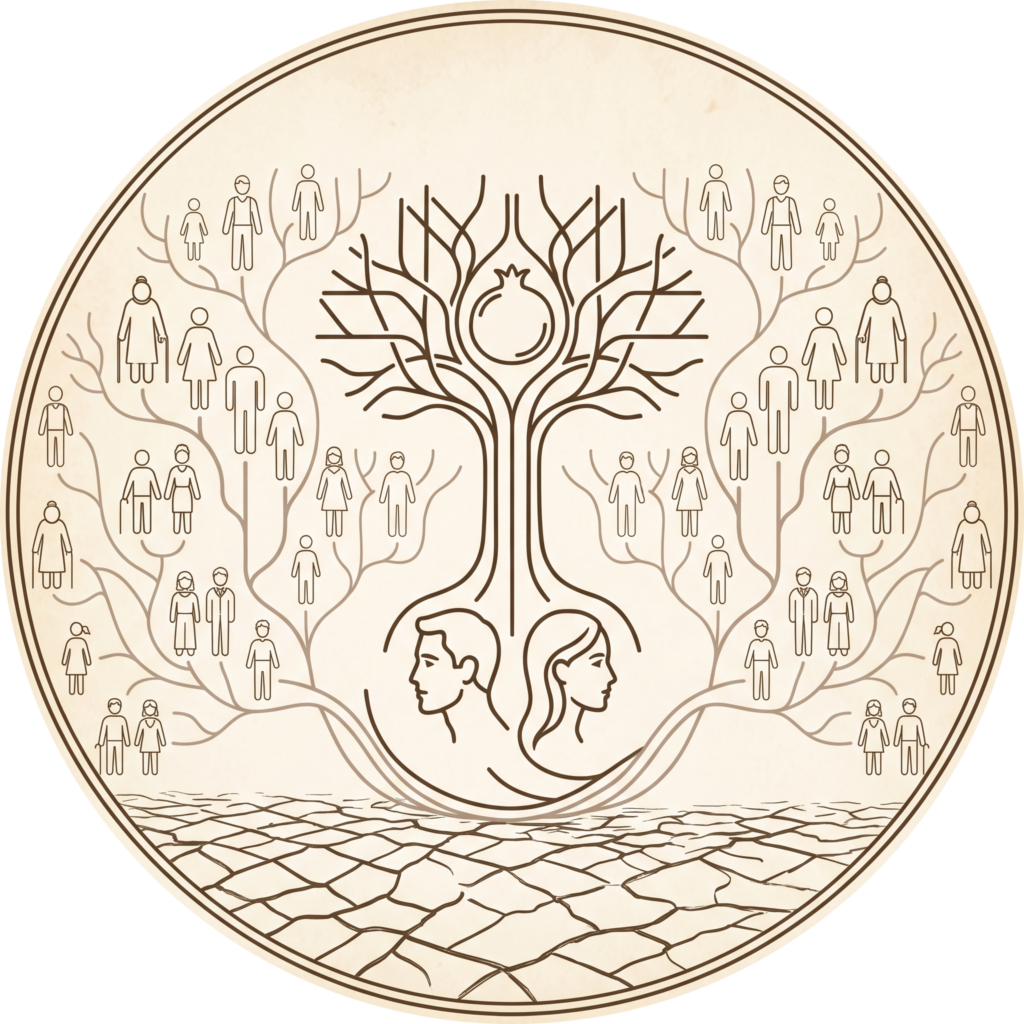
Psalm 58 contrasts the corrupt and subversive judgment of wicked men with the righteous and prevailing judgment of God. It portrays a righteous man crying out in indignation against rampant injustice. Confronted with the unscrupulous and dishonest civil leaders, the psalmist opened the text with this bitter interrogation:
Do you indeed speak righteousness, you silent ones? Do you judge upright, you sons of men? No, in heart you work wickedness; you weigh out the violence of your hands in the earth. (Psalm 58:1-2)
David was not composing a theological argument on human nature or the origin of sin. Yet for centuries, advocates of the depravity doctrine have isolated a single verse from this psalm and transformed it into a foundational proof-text for their inherited corruption teaching. The next verse in the text reads:
“The wicked are estranged from the womb; they go astray as soon as they are born, speaking lies.” (Psalm 58:3)
David’s denunciation of evil judges (as per the context) is sadly misapplied by some to every newborn infant. Some are very direct, such as Arthur W. Pink (1886-1952), who asserted:
“…from the moment of birth every child is morally and spiritually cut off from the Lord – a lost sinner … Their very being is polluted, for evil is bred in them.”
Others are self-contradictory. Albert Barnes (1798-1870) acknowledged:
“…it cannot be shown that the psalmist in this declaration had reference to the whole human race, or that he meant to make a universal declaration in regard to man as being early estranged or alienated from God; and the passage, therefore cannot directly, and with exact propriety, be adduced to prove the doctrine that “original sin” pertains to all the race – whatever may be true on that point.”
But then he immediately stated:
“…if it is demonstrated from other passages, and from facts, that all men are wicked or depraved, then the assertion here becomes a proof that this is from the womb – from their very birth.”
John Gill (1697-1771) added:
“…original corruption of nature accounts for all the wickedness done by men: they are conceived in sin, shapen in iniquity, and are transgressors from the womb.”
And finally, Charles Spurgeon (1834-1892) concluded:
“To be untruthful is one of the surest proofs of a fallen state, and since falsehood is universal, so also is human depravity.”
Are infants born spiritually dead, estranged from God, and actively speaking lies as soon as they leave the womb? To answer this, we must test whether this interpretation of verse 3 is consistent with the immediate poetic context and the broader voice of the Scriptures.
A Poetic Expression Among Poetic Expressions
The psalms are poetry, and poetry, whether in English, Hebrew or some other language, contains figures and literary devices such as metonymy, symbolism, similes, and more. Psalm 58 is filled with metaphors and figures describing the wicked. They are pictured as being dangerous, like a poisonous snake or a cobra who will not be charmed (v 4-5), or lion cubs barring their fangs (v 6); but are also portrayed as temporary, even momentary – like water that rushes away (v 7), the snail that seemingly melts as it crawls (v 8), or a stillborn child (v 8).
None of these descriptions are meant to be taken literally. We do not conclude that humans literally secrete viper venom (v 4) nor do most consider smashing the teeth of evil people a viable solution (v 6). It is understood these are poetic devices, vivid metaphoric images about the wicked. Why then, should verse 3 be isolated from the rest of the text and forced into a literalistic framework?
When David wrote that the wicked “go astray as soon as they are born, speaking lies,” he employed a figure of speech known as hyperbole. Hyperbole is essentially a literary caricature, using extreme distortion to highlight a core truth about the person. The Psalmist’s point in verse 3 is not that all humans are born sinful, but that the propensity to do evil is so deeply ingrained in the wicked, that it is as though they had done so from birth. But taken literally, the verse presents an absurdity, for newborn infants do not have the cognitive development, vocal capacity, nor moral awareness to formulate and articulate falsehoods. A literal interpretation collapses under even the slightest bit of scrutiny.
In his work Confessions, Augustine of Hippo (354-430 AD) famously reflected on the sinful and greedy nature of an infant’s mind. He wrote:
“For before You none is free from sin, not even the infant which has lived but a day upon the earth. … in the weakness of the infant’s limbs, and not in its will, lies its innocency. I myself have seen and known an infant to be jealous though it could not speak. It became pale, and cast bitter looks on its foster-brother.”
He didn’t reference Psalm 58 specifically, but Augustine’s statement serves to give credence to the view that a baby’s cry somehow demonstrates innate depravity. An article at Generations.org written by Nolan Glazier explicitly argues that an infant’s cry fits the description of Psalm 58:3:
“On the day that a mother delivers a six pound, four-ounce baby, that little one has a heart that already hates God and His truth. Though the little child may seem harmless as just a cute, cuddly, baby, the Bible clearly states that this little person speaks lies as soon as he is born. On the first day of his life, before he has learned any bad habits from his brothers and sisters, that little child is ready to lie. He might cry for food when he is not hungry at all. His sinful heart begins operating from day one.”
Crying is not a moral act of malice or deception; it is a newborn’s sole, God-given mechanism for communication. Glazier characterizes a little one’s cry as being about food, even if he is not hungry, and thus a lie. A baby’s needs extend far beyond nutrition. Infants cry when they are soiled, cold, startled, in pain, overstimulated, or seeking the security of physical contact, which is a fundamental biological and emotional need. God created us with an innate need for affection and human connection. To reclassify a helpless child’s natural desire for love or comfort as a deceptive ploy is to project the nefarious vile manipulation used by some adults to get their way onto the innocent.
An article asking, “Are we born sinners?” on GotQuestions.org, cites Romans 5:12 (see response here), Psalm 51:5 (see response here), Ephesians 2:3 (see response here), and Psalm 58:3 as positive proof of human depravity. We read:
“No one has to teach a child to lie; rather, we must go to great lengths to impress upon children the value of telling the truth. Toddlers are naturally selfish, with their innate, although faulty, understanding that everything is “mine.” Sinful behavior comes naturally for the little ones because they are born sinners.”
The author gave Psalm 58:3 as evidence that “little ones” are “born sinners.” Remember, the text literally says, “they go astray as soon as they are born, speaking lies” – yet in his explanation of the text, the writer completely avoids lying infants and selfish newborns, opting for language such as “a child,” “children,” and “toddlers.” If Psalm 58:3 affirms depravity from birth, why not lean into that? Could it be the author wanted the impact of a literal reading of Psalm 58:3 without having to deal with the ramifications of the interpretation – namely, newborns verbalizing lies?
In everyday conversation, we naturally understand hyperbolic expressions. If a parent says of a rebellious teenager, “He’s been causing trouble since the day he was born,” everyone understands the point: the person has a long-established habit of defiance. David uses the exact same poetic figure to emphasize that the unjust rulers he condemned were seasoned, habitual liars whose deceit felt as old as life itself.
“The Wicked” vs. “The Righteous”
By removing Psalm 58:3 from its context, the depravity doctrine advocate fails to note the contrast established in the Psalm between two distinct categories: “the wicked” (v 3, 10) and “the righteous” (v 10, 11).
If David intended to teach that every human being is born inherently corrupt and estranged from God, then specifying that “the wicked” are estranged becomes entirely meaningless. Since, in the depravity doctrine model all infants are born wicked, would “the wicked” not be synonymous with “mankind,” thus destroying any contrast? If everyone is wicked (ie. born in sin), then no one is righteous. Yet when David identifies “the wicked” in the text, he is not speaking about every human – contextually, it is about unrighteous judges. And a contrast between “the wicked” and “the righteous” is evident in the text (v 3, 10-11).
Also, notice that David used third-person plural pronouns: “They go astray” (v 3), “their poison is like the poison of a serpent” (v 4), “break their teeth” (v 6), etc.. He does not say “we” (all humanity) are estranged from the womb. He doesn’t include himself or others who were righteous (v 10-11) with the wicked. Forcing Psalm 58:3 into a universal declaration of hereditary depravity denies the context and destroys the contrast established in the text between the corrupt rulers and the righteous who trust in God.
What Does It Mean to Be “Estranged” or to “Go Astray”?
“The wicked are estranged from the womb; they go astray as soon as they are born…” What do those words – estranged and astray – mean?
The Hebrew word translated “estranged” is zûrּ, which means:
“to turn aside (especially for lodging); hence to be a foreigner, strange, profane; specifically (active participle) to commit adultery: – (come from) another (man, place), fanner, go away, (e-)strange(-r, thing, woman.” (Strong’s)
It conveys the idea of turning away from something or somewhere, going away from, or departing. You cannot turn away or be estranged from a place or relationship you have never been at or in.
The word rendered “go astray” is tâ‛âhּ, meaning:
“to err, wander, go astray, stagger” (Brown-Driver-Briggs)
Both words describe the wicked as people who have departed into a pattern of wickedness; nothing in the vocabulary requires or suggests this was an inherited condition. The latter verb is also used in Isaiah 53:6, “All we like sheep have gone astray; we have turned every one to his own way…” Logically, one cannot depart or go astray from a path they have never been on. To go astray spiritually – to depart from the Lord – there must have been an initial point of innocence and alignment with God.
What Did Ancient Jewish Sources Believe?
Jewish writings about the text do not portray Psalm 58:3 as proof that infants inherit Adam’s sin or enter the world subject to God’s wrath. Rabbinic theology rejects the concept of inherited sin. Rather, the description is perceived to be about specific individuals (ie. the wicked) or metaphoric for deep-seated habitual rebellion.
Abraham Ibn Ezra (1089-1167) indicates the text refers to an individual trait of the wicked rather than a universal human condition. He writes of the word zûrּ (estranged):
“…because from the time of their birth they are strangers in their lineage from other newborns.”
In the Midrash Rabbah, a collection of ancient Rabbinic commentaries, we find the Genesis (Bereshit) Rabbah which was compiled in 400-450 AD. Therein, the text is used to contrast Esau and Jacob. It reads:
“Rabbi Berekhya in the name of Rabbi Levi: So that you will not say that it was after he [Esau] emerged from his mother’s womb that he confronted him, but rather, while he was still in his mother’s womb, his fist [zirte] was outstretched toward him. That is what is written: ‘The wicked are corrupt [zoru] from the womb.’ (Psalm 58:4). ‘The children were agitated within her’ – when she would stand adjacent to synagogues and study halls, Jacob would convulse to emerge. That is what is written: ‘Before I formed you in the belly I knew you’ (Jeremiah 1:5). When she would pass houses of idol worship, Esau would run and convulse to emerge. That is what is written: ‘The wicked are corrupt from the womb.’”
The Midrash does take the womb imagery seriously, but significantly, the Rabbis applied Psalm 58:3 (listed as verse 4 in the Masoretic Text) to a particular individual, Esau, rather than interpreting it as a declaration that every human being inherits Adam’s guilt or an innate depraved nature. The Rabbis also attribute the sanctification spoken of in Jeremiah 1:5 to Jacob, who shared the same womb. Neither were inherently wicked or righteous in the womb – in both cases, the Midrash considered the outcome of life, not the genesis of life. In the latter portion of the text, obviously, there were no synagogues or Torah studies in the days of Rebekah. This embellishment is used to stress the divergence between Esau and Jacob’s spiritual focus – not a moral condition determined in the womb, but their disposition and eventual choices are being projected backward into the womb as a poetic explanation of the different courses their lives would take.
The book of Sirach (also called Ecclesiasticus) is a Jewish wisdom book written by Yeshua ben Sira, a Jewish scribe in the early second century BC. It is regarded as canonical by Roman Catholic and Eastern Orthodox churches, though not part of the accepted Jewish canon. However, it clearly presents the understanding of personal responsibility and human freedom, rather than teaching universal inherited sin. It declares:
“Do not say, ‘It was the Lord’s doing that I fell away’; for he does not do what he hates. Do not say, ‘It was he who led me astray’; for he has no need of the sinful. … It was he who created humankind in the beginning, and he left them in the power of their own free choice. If you choose, you can keep the commandments, and to act faithfully is a matter of your own choice. He has placed before you fire and water; stretch out your hand for whichever you will choose. Before each person are life and death, and whichever one chooses will be given.” (Sirach 15:11-12, 14-17)
How Early Christians Read It
The teaching of hereditary depravity was in circulation long before Augustine, but the ongoing existence or popularity of a teaching does not make it true. One could easily amass a list of “church father” quotes in support of an inherited sin nature, but there are also quotes which affirm humans are born innocent and only become corrupt through personal choice and environmental influence.
Consider pre-Augustine quotes from Justin Martyr (100165 AD) and Clement of Alexandria (150-215 AD). They did not address Psalm 58, but spoke to the general topic of personal responsibility or universal hereditary guilt.
“If the human race does not have the power by free choice to avoid what is shameful and to choose what is right, then there is no responsibility for actions of any kind. … But God did not make man like other beings, such as trees and animals, which have no power of choice. For he would not be worthy of rewards or praise if he did not choose the good of himself, but was so made, nor if he were evil would he justly deserve punishment, if he were not such of himself, but was unable to be anything different from that for which he was formed.” (Justin Martyr)
“Let them tell us how the newly born child could commit fornication, or how that which has done nothing has fallen under the curse of Adam. The only consistent answer for them, it seems, is to say that birth is an evil, not only for the body, but also for the soul for the sake of which the body itself exists. And when David says: ‘In sin I was born and in unrighteousness my mother conceived me,’ he says in prophetic manner that Eve is his mother. For Eve became the mother of the living. But if he was conceived in sin, yet he was not himself in sin, nor is he himself sin.” (Clement of Alexandria)
Consider also two contemporaries of Augustine, Theodoret of Cyrus (393-457 AD) and John Chrysostom (347-407 AD). Theodoret did not view Psalm 58:3 as proof of an inherent nature but evidence of divine foreknowledge. Of David’s reference to estrangement from the womb, Theodoret wrote:
“…He inserted from the womb and from birth because God was aware of their behavior before their coming to be; he said so to Jeremiah, remember: ‘Before my forming you in the womb, I knew you; and before you came out of the womb, I sanctified you’; and to Pharaoh, ‘This is why I vivified you, that I might demonstrate my power through you.’ But God’s foreknowledge did not make Pharaoh wicked or Jeremiah holy; rather, as God he knew ahead of time what would come to be.” (Theodoret of Cyrus)
We do not have a quote from Chrysostom on Psalm 58, but he did comment on the topic of inherited sin in the context of John 9. He wrote:
“…His disciples … asked Him, saying, ‘Who did sin, the man, or his parents?’ A mistaken question, for how could he sin before he was born? And how, if his parents had sinned, would he have been punished?” (John Chrysostom)
These writers illustrate that the depravity doctrine was not universally held among Christian teachers.
The Consistent Voice of Scripture
Scripture must be interpreted in harmony with itself (2 Timothy 2:15). If there are clear statements about childhood innocence in the Bible, then a literal interpretation of this poetic text to prove hereditary depravity completely breaks down. There are multiple texts which speak of the condition of children. Consider a few examples:
“Moreover your little ones and your children, who you say will be victims, who today have no knowledge of good and evil, they shall go in there; to them I will give it, and they shall possess it.” (Deuteronomy 1:39)
How could infants be speaking lies and actively rebelling against God from the womb if God Himself declares they possess “no knowledge of good and evil”?
“Truly, this only I have found: that God made man upright, but they have sought out many schemes.” (Ecclesiastes 7:29)
God does not create spiritually dead, inherently depraved monsters in the womb. He creates every human being “upright” (Hebrew yâshâr, “straight, upright, correct, right,” Brown-Driver-Briggs). Corruption occurs when individuals subsequently “seek out many schemes.”
“The soul who sins shall die. The son shall not bear the guilt of the father, nor the father bear the guilt of the son. The righteousness of the righteous shall be upon himself, and the wickedness of the wicked shall be upon himself.” (Ezekiel 18:20)
According to Ezekiel, a child does not bear the guilt of the father’s sin – by extension, we are not guilty of our grandfather’s sin, our great-grandfather’s sin, etc.. We are no more guilty of Adam’s sin than he is guilty of our sin.
“Let the little children come to Me, and do not forbid them; for of such is the kingdom of heaven.” (Matthew 19:14)
If children are corrupt enemies of God at birth, what does that mean for the Lord’s kingdom? In fact, a chapter earlier, Jesus stated it even more bluntly:
“…unless you are converted and become as little children, you will by no means enter the kingdom of heaven.” (Matthew 18:3)
Someone really should have informed Jesus about the nature of children before He made such an awful statement! Surely the Lord was not telling His followers they must convert and become greedy and jealous (Augustine) haters for God and His word (Glazier) who exercise selfish and sinful behaviour (GotQuestions.org). And if we do not become this, we cannot enter heaven! Absurd! Jesus held up young children as models of humility, purity, and innocence because they have not yet been corrupted by sin.
Conclusion
Psalm 58:3 is Hebrew hyperbole designed to expose the deeply rooted wickedness of unjust judges. It is not a statement on the spiritual nature of newborns. David did not pass judgment on infants in a maternity ward, condemning them as liars. He spoke against the corrupt rulers who spoke and did wickedly rather than speaking righteousness and judging uprightly.
To take a single line of poetic imagery, tear it from its context, and use it to declare that innocent babies are born hating God and hated by God – spiritually dead, depraved, and already guilty of sin is to malign the Psalm, the Psalmist, the Spirit of God who inspired him, and a severe misrepresentation and attack on God’s character and creation.
We are not born into this world as condemned rebels bearing the guilt of Adam. God creates every child upright, innocent, and pure. We become sinners not because we inherit a corrupted nature from our parents or Adam, but because—like the unjust judges of David’s day—we choose to turn aside, go astray, and embrace sin for ourselves.
Works Referenced
- Arthur W. Pink. Gleanings from the Scriptures, “Man’s Total Depravity.”
- Albert Barnes. Notes on the Old Testament: Psalms, Vol. II.
- John Gill. An Exposition of the Old and New Testament, Vol. III.
- Charles H. Spurgeon. The Treasury of David, Vol. III.
- Augustine. Confessions, Book 1, Chapter 7.
- Nolan Glazier. Psalms 58, sites.generations.org/psalm-58
- GotQuestions.org. “Are We All Born Sinners?” https://www.gotquestions.org/born-sinners.html.
- Francis Brown, S.R. Driver, and Charles A. Briggs. The Brown-Driver-Briggs Hebrew and English Lexicon.
- Abraham Ibn Ezra. Ibn Ezra on Psalms, via sefaria.org/Ibn_Ezra_on_Psalms.58.3.2.
- The Midrash Rabbah. Bereshit Rabbah 63; via sefaria.org/Bereshit_Rabbah.63.6
- The New Revised Standard Version Catholic Edition. Sirach 15:11-12, 14-17.
- Justin Martyr. The First Apology of Justin Martyr, Chapter 43; via ccel.com.
- Clement of Alexandria. Stromata, Book III, Chapter 16; via EarlyChristianWritings.com.
- John Chrysostom. Homilies on the Gospel of St. John, Homily 56; via NewAdvent.org/fathers.
Links: YouVersion | GROW magazine
Return to the article archive