In the defense of the depravity doctrine, Romans 3:9-18 is often treated as a summary of man’s innate condition – proof that humanity is corrupt from birth and incapable of seeking God or doing any spiritual good. However, a disciplined analysis of Paul’s argumentative structure, a contextual reading of his chain of Old Testament quotes, and careful attention to the language of the text yield a different conclusion. Paul is proving universal guilt, not defining universal inherited inability.
Of the proof-texts used to support the doctrine of Total Hereditary Depravity, few are cited with more confidence than Ephesians 2:1-3. To the proponent of inherited sin, Paul’s description of humanity as being “by nature children of wrath” is the definitive smoking gun. It is argued that if we are under God’s wrath by nature, then that nature – and its attendant guilt – must be something we possess from the moment of conception.
B.H. Carroll, the founder of Southwestern Baptist Theological Seminary, articulated this position clearly in his Interpretation of the English Bible:
This passage knocks the bottom out of the thought that sin consists in the willful transgression of a known commandment. The apostle here refers to original sin – the nature with which we are born. 1
If Carroll is correct, then the Bible teaches that infants are born under the judicial condemnation of God. However, if we examine the context, the grammar, and the historical understanding of the Greek language, we find that Paul is not describing an inherited nature, but a spiritual condition manufactured by personal choice.
When David sat down to pen Psalm 51, he wasn’t writing a systematic theology on the origin of sin. He was a man crushed by the weight of his sin. What may have begun as a lazy season in a stalwart monarch’s life quickly deteriorated into a sin spiral. A lustful stare led to adultery with his neighbour’s wife. That moment of infidelity resulted in an impending birth. Fear of exposure drove David to deceive and intoxicate his friend Uriah, trying to cover his deed. When that failed, he sent Uriah back to the battlefield, carrying his own death sentence sealed by the king. In this Psalm, David wasn’t seeking an excuse or explanation; he was seeking a way back to God.
Calvinists love the book of Romans, believing it strongly supports their doctrine of Total Hereditary Depravity, particularly chapter 5. I suggest their reading of Romans 5 fails to grasp the true teaching of the apostle Paul (and the rest of Scripture). Advocates of the depravity doctrine often cite several verses in this chapter:
Romans 5:12, “…through one man sin entered the world, and death through sin, and thus death spread to all men, because all sinned…”
Romans 5:15, “…by the one man’s offense many died…”
Romans 5:18, “…through one man’s offense judgment came to all men, resulting in condemnation…”
Romans 5:19, “…by one man’s disobedience many were made sinners…”
Without careful study, one might conclude we died “in Adam” – that his specific sin brought spiritual death to every infant born thereafter. But there is a phrase at the end of verse 12 that serves as the master key to the entire context. Paul’s point is not that we inherited a sinful nature from Adam (as Arminius suggested) or the legal guilt of his sin (as Calvin taught). While death indeed entered the world through Adam’s transgression, the apostle explicitly stated that it spread to all men, not because of Adam’s sin, but “because all sinned.”
The opening chapters to the book of Genesis reveal details concerning the creation of the earth and of mankind, as well as many firsts (first man, first woman, first marriage, first command, first sin, first sacrifices, first children, first murder —you get the point). Genesis is the book of beginning after beginning. And yet within those early chapters were are some often forgotten or seldom mentioned tidbits. Let’s note some of them here.
Did God sin? In Matthew 5:27-28, we find that the thought of an evil action is basically akin to committing sin itself. Exodus 32:14 says the LORD repented of an evil thought He had. Numbers 31:17-18 has Him commmitting an immoral act, killing innocent children. Is there a contradiction?
Many notable events in the life of David are recorded in the Scriptures. Perhhaps the two which most define his life were battles with giants. In the first, he slew Goliath, the great champion of the Philistines. This event displayed his great faith in God, and was the first of many successful battles he would fight. In fact, there is no indication in Scriptures that he lost even one conflict. Every time he stepped on a battlefield, he walked away.
However, when David came face to face with another giant, he was unprepared. He entered the arena with a foe he should have ruled over (Genesis 4:7), but instead he would suffer a defeat that would haunt him for the rest of his life. He lost, not to a man of brute strength, but to the unlawful desire of his own heart.
The front page of the August 16th Whig Standard had an article on the Pagan Pride day hosted in City Park last Saturday. What is paganism, or what is more commonly referred to today as Modern Paganism?
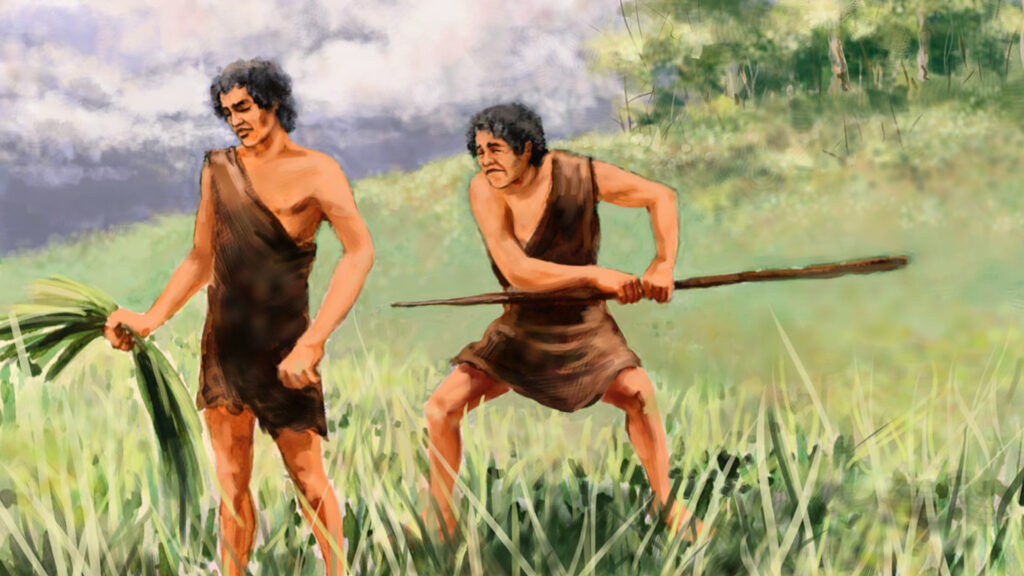
In a vivid picture of the wicked, Jude states they have “gone in the way of Cain” (Jude 1:11). John tells us that he killed Abel “because his works were evil and his brother’s righteous” (1 John 3:12). Hebrews reveals that “by faith Abel offered to God a more excellent sacrifice than Cain” (Hebews 11:4) Cain walked contrary to the will of God, and sadly, many today have “gone in the way of Cain” also. Let us discuss the way of Cain in greater detail.